


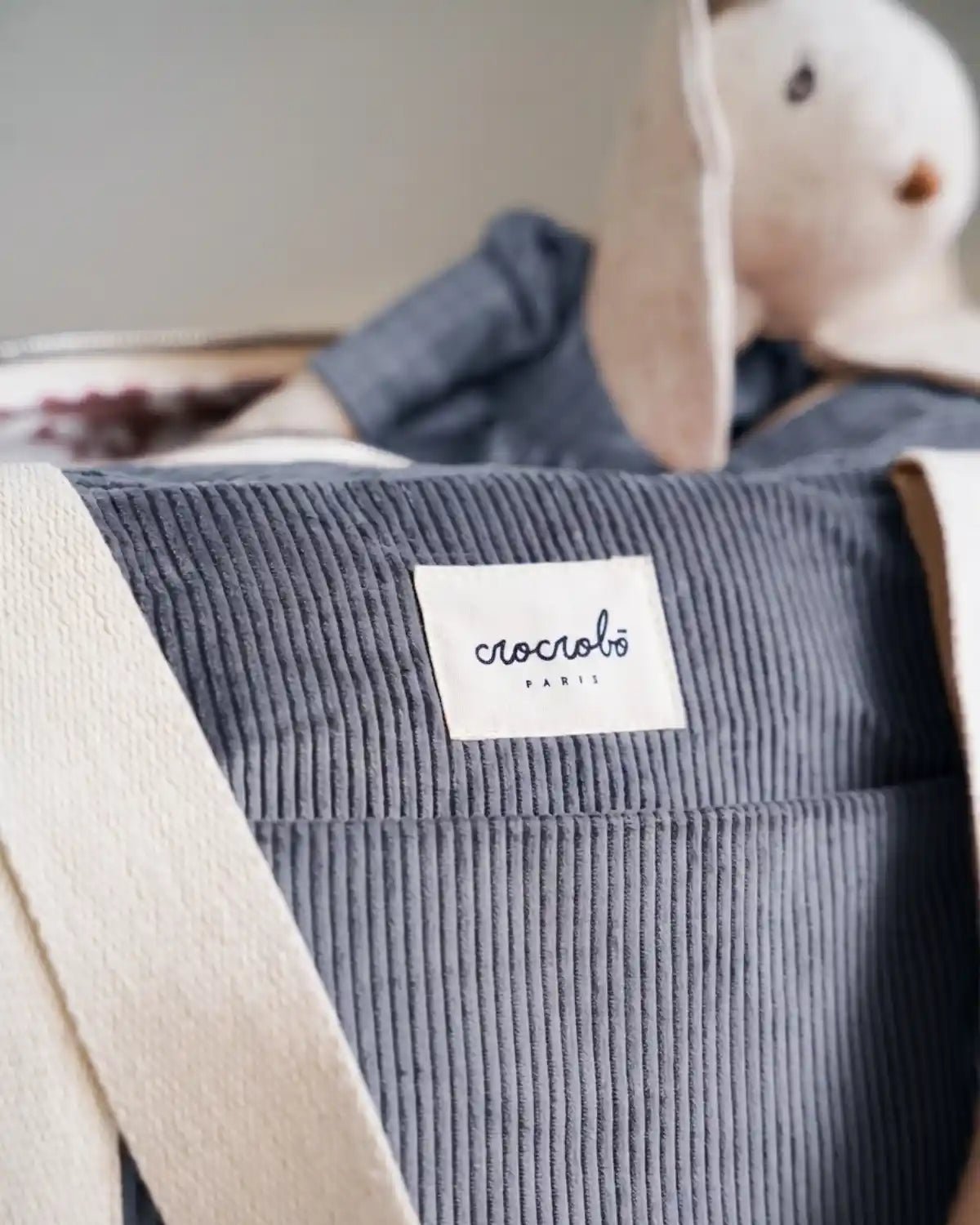
Eco-friendly changing bag: how to choose in 2026
You have opened ten tabs, compared five brands, read twenty contradictory reviews — and you are still stuck on the same question: which one should I buy, without feeling guilty about the planet or giving up on style?
The good news: in 2026, the range of eco-friendly changing bags has grown considerably. The less good news: not everything that calls itself “eco” actually is. This article sets out the criteria that genuinely matter — and the ones that exist only to dress up a marketing pitch.
Why choose an eco-friendly changing bag, really?
The changing bag is one of the accessories you will carry the longest and the most often of the whole baby phase. Three years on average. Sometimes more if you have two little ones back to back.
Choosing an eco-friendly model ticks three boxes at once:
- Your little one's health: fewer chemical substances in contact with their things (bottle, comforter, damp wipes sitting in the bag all day…).
- Durability: a properly made bag lasts the full three years without the seams gaping by the time school starts.
- Consistency: you carry something you can stand behind, both in your own conscience and in front of your friends.
In short, it is rarely an indulgence. More often, it is simply clear-headed.
The 5 criteria worth checking (and the ones to ignore)
1. Material certifications — the only proof that speaks
A brand that says “natural fabric” is saying nothing. A brand that displays Oeko-Tex Standard 100, GOTS or GRS (recycled materials) is saying something: an independent body has verified either the absence of harmful substances or the recycled origin of the fibres.
Always ask yourself: where is the label, and which component does it cover? A bag certified Oeko-Tex on the outer fabric alone, but lined with unverified PVC, is not the same thing as a bag certified across all of its components.
2. The main material — organic cotton, recycled polyester or vegan leather?
Three options dominate the market in 2026:
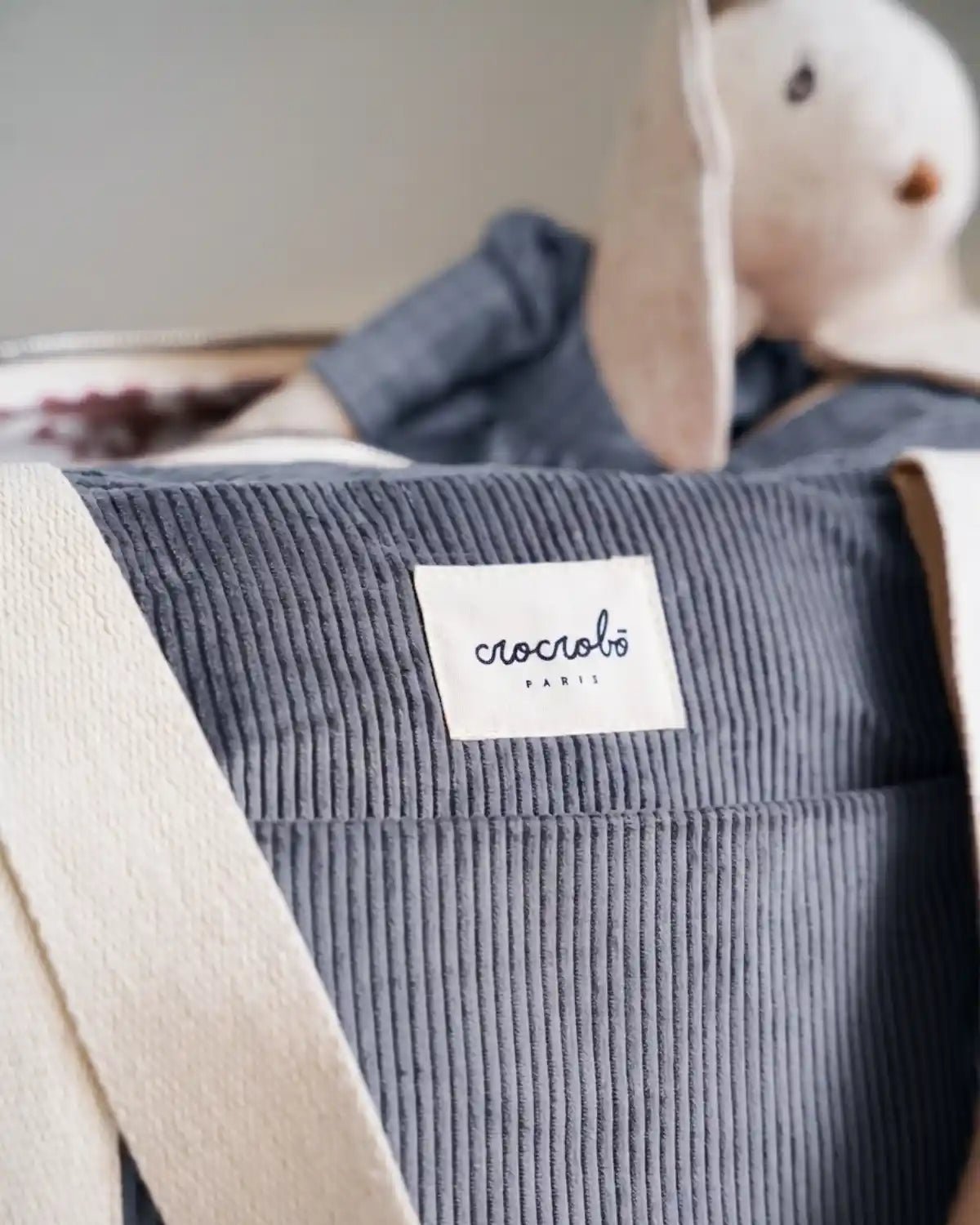
- Organic cotton: soft, breathable, needs washing often. Favour the Nordic and French brands that trace their supply chain (Nobodinoz, Konges Sløjd, Liewood).
- Recycled polyester (rPET): made from plastic bottles, hard-wearing, water-repellent. Ideal for parents who want a bag that shrugs off a shower without any drama. Lässig and Cipu have long histories in this segment.
- Vegan leather: a premium alternative to animal leather, provided the brand states the exact composition (polyurethane, cactus, grape…). Be wary of “vegan leather” with no further detail.
3. Where it is made — Europe, Asia, or unclear?
This is the criterion most often passed over in silence. An “eco” brand that does not say where its bag is made is usually hiding something. European manufacturing (Portugal, Poland, France, Italy) remains the best compromise between quality, carbon impact and working conditions.
Conversely, be wary of brands that vaguely slip in “designed in France” without specifying where production actually takes place.
4. The construction — a vegan bag that lasts six months is still waste
Being eco-friendly is not only about the material. It is also about how long the bag lasts. Look at:
- The seams (double-stitched, reinforced at the stress points)
- The fastenings (YKK zips or equivalent, not a zip that jams on day six)
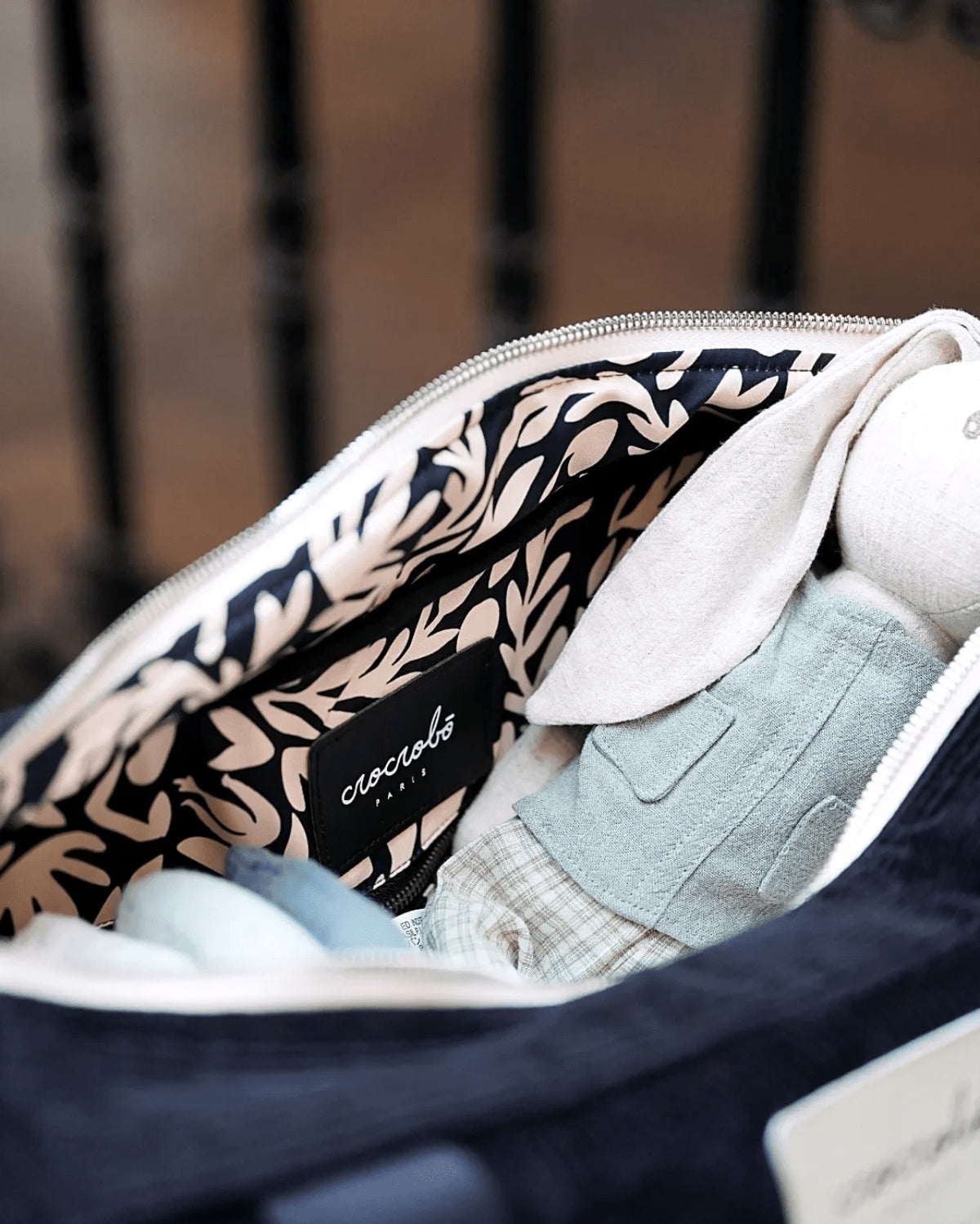
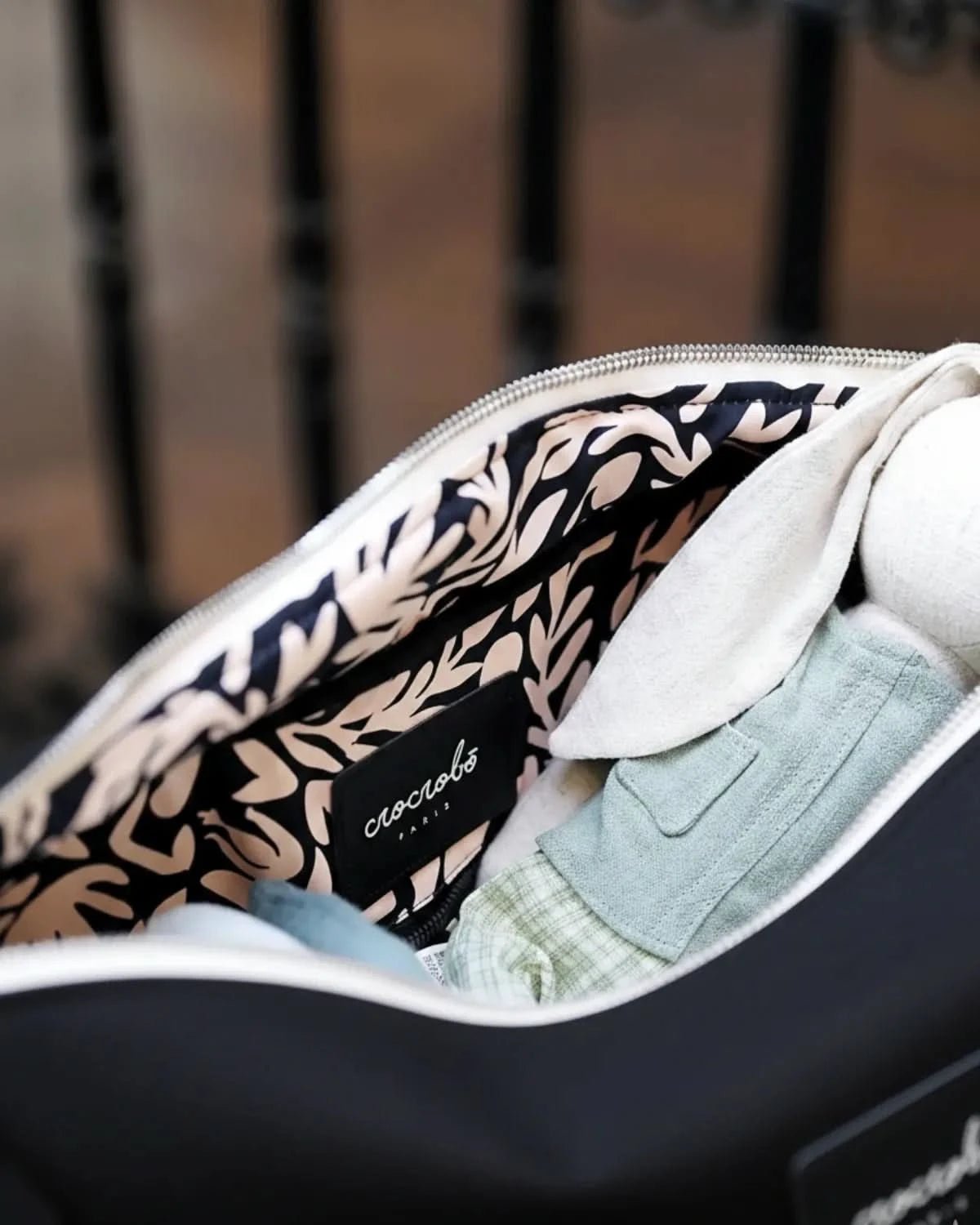
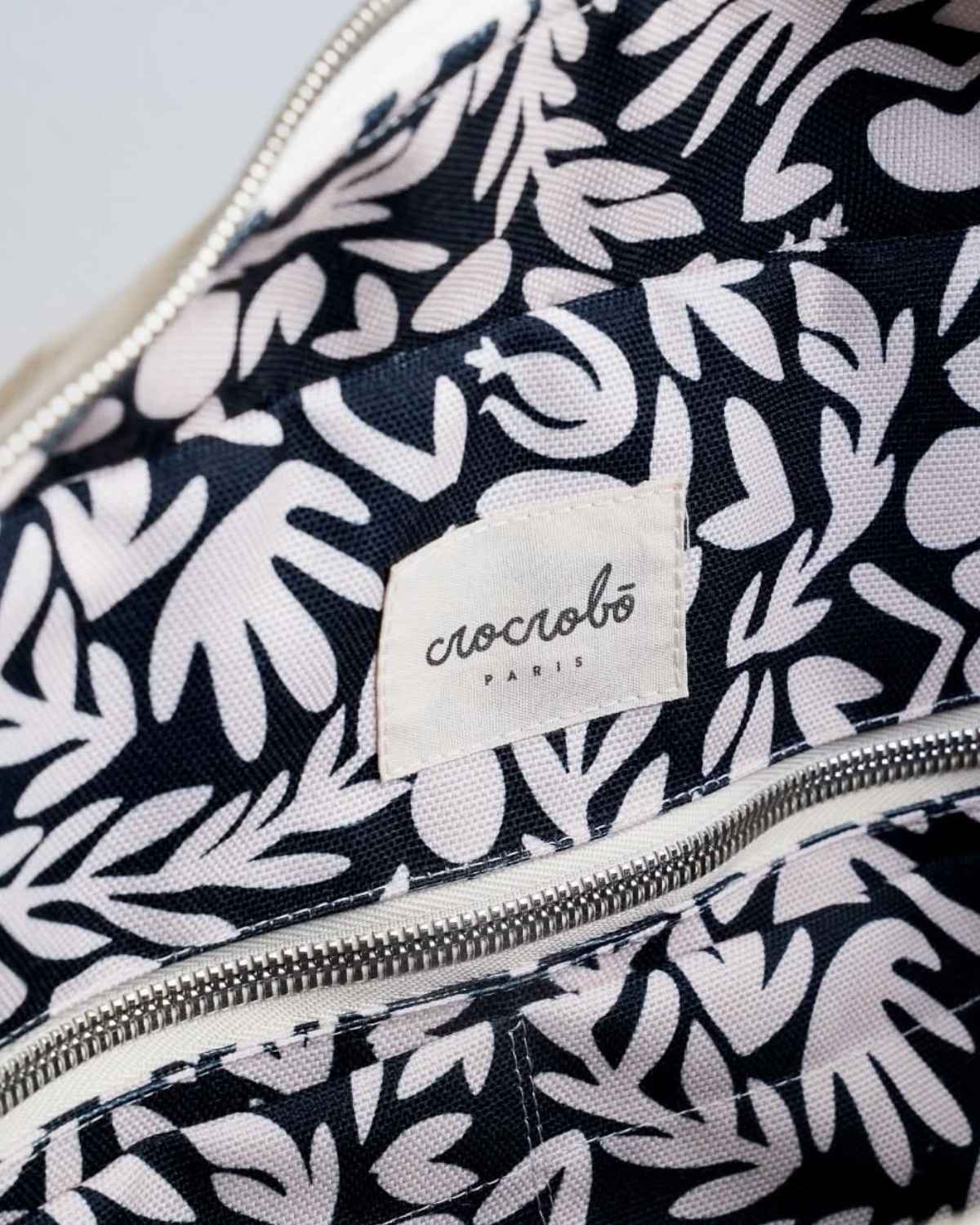
- The inner lining (water-repellent, wipes clean with a sponge)
- The compartments (a badly designed bag you hate using is waste in the making)
5. The design — yes, it is an environmental criterion
A bag you love is a bag you keep. A bag that is not you is one you resell within six months and replace with another. Design is part of durability. Choose a shape and a colour palette that will still hold up in your photos three years from now.
The greenwashing trap: 4 warning signs
- “Eco-friendly material” with no measurable certification → a buzzword with nothing behind it
- Communication built entirely on green visuals → nobody becomes sustainable by picking sage green
- No mention of the precise place of manufacture → low-cost offshoring is very likely
- A “zero plastic” promise on a bag that obviously contains plastic components (zips, buckles, lining) → plain marketing untruth
Backpack, shoulder bag or tote? The right format for your life
- Backpack: hands free, back protected, ideal in town, with a pushchair or a baby carrier. The dominant format among new parents in 2026.
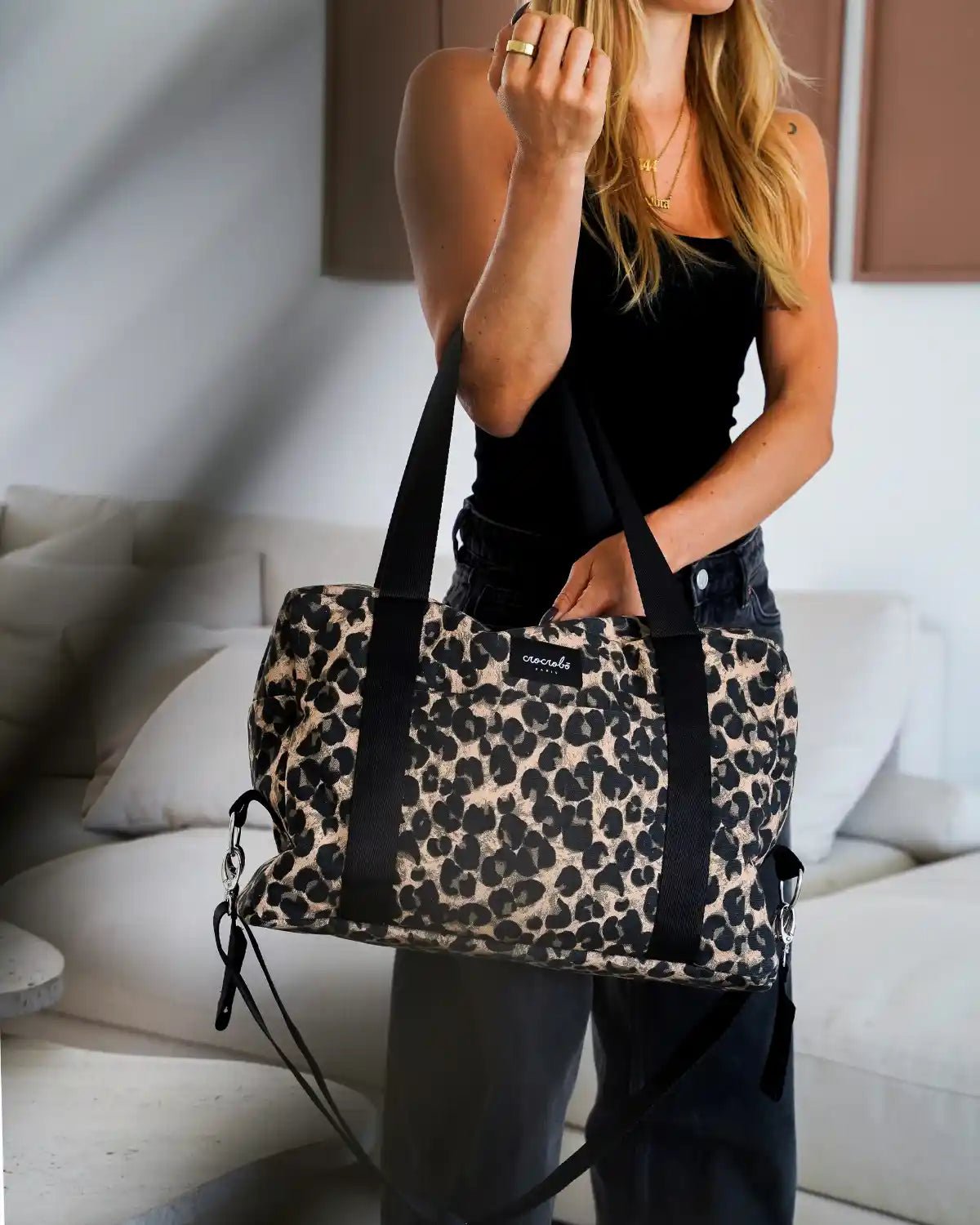
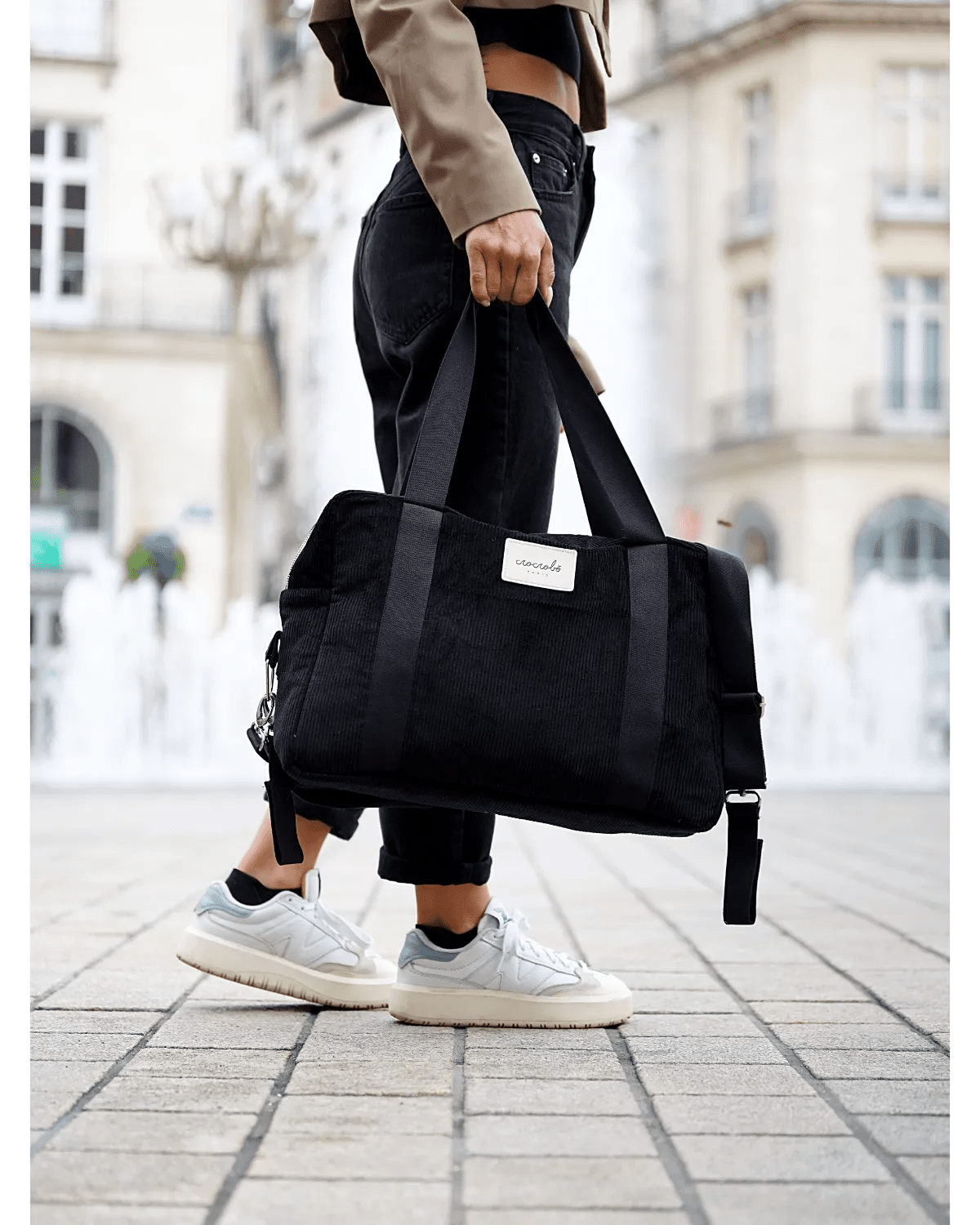
- Convertible shoulder bag: for those who want an “adult” bag they can still use once the baby phase is over.
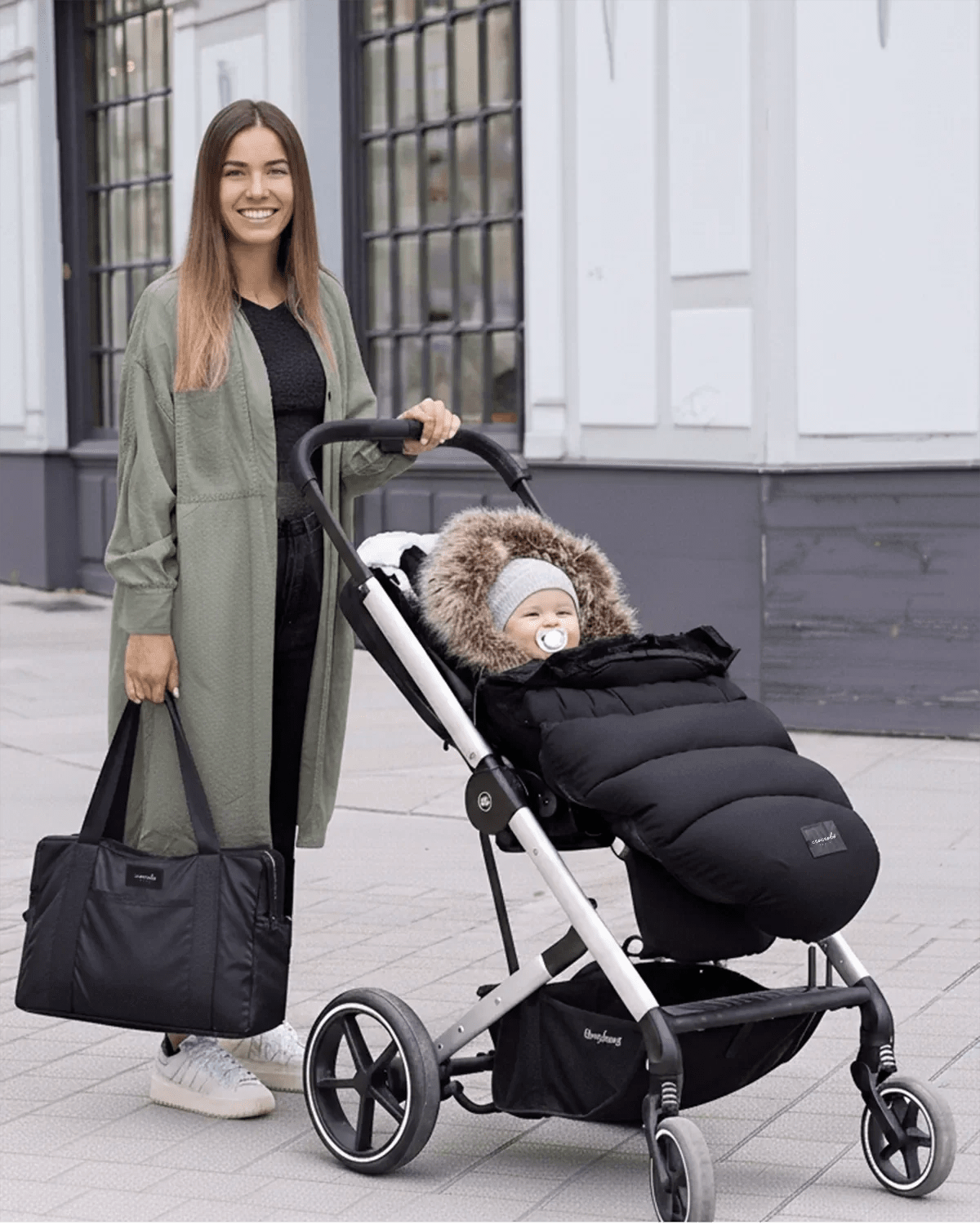
- Tote / shopper: more fashion-led, but best kept for short outings — your shoulder tires quickly with an 8 kg little one in a carrier.
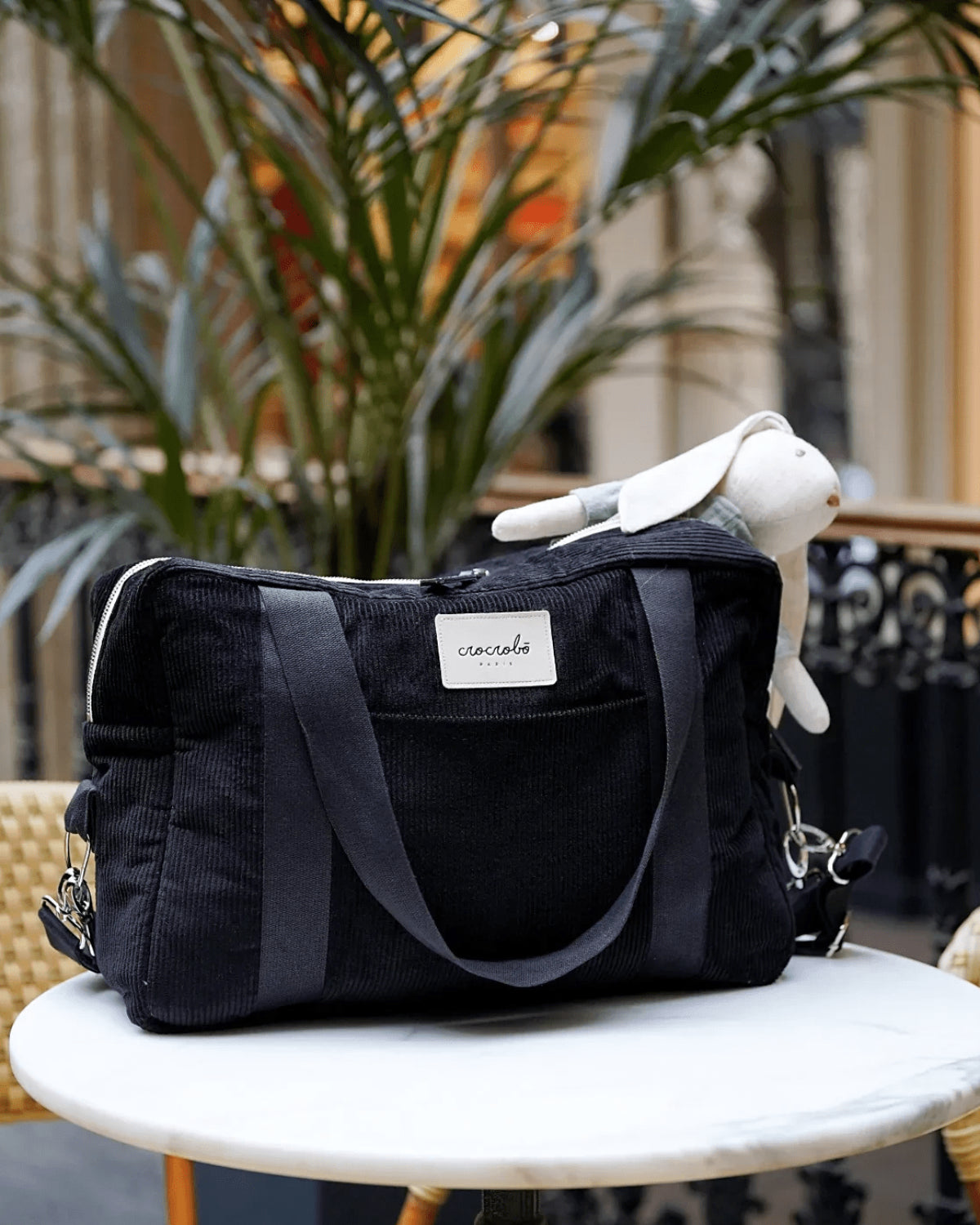
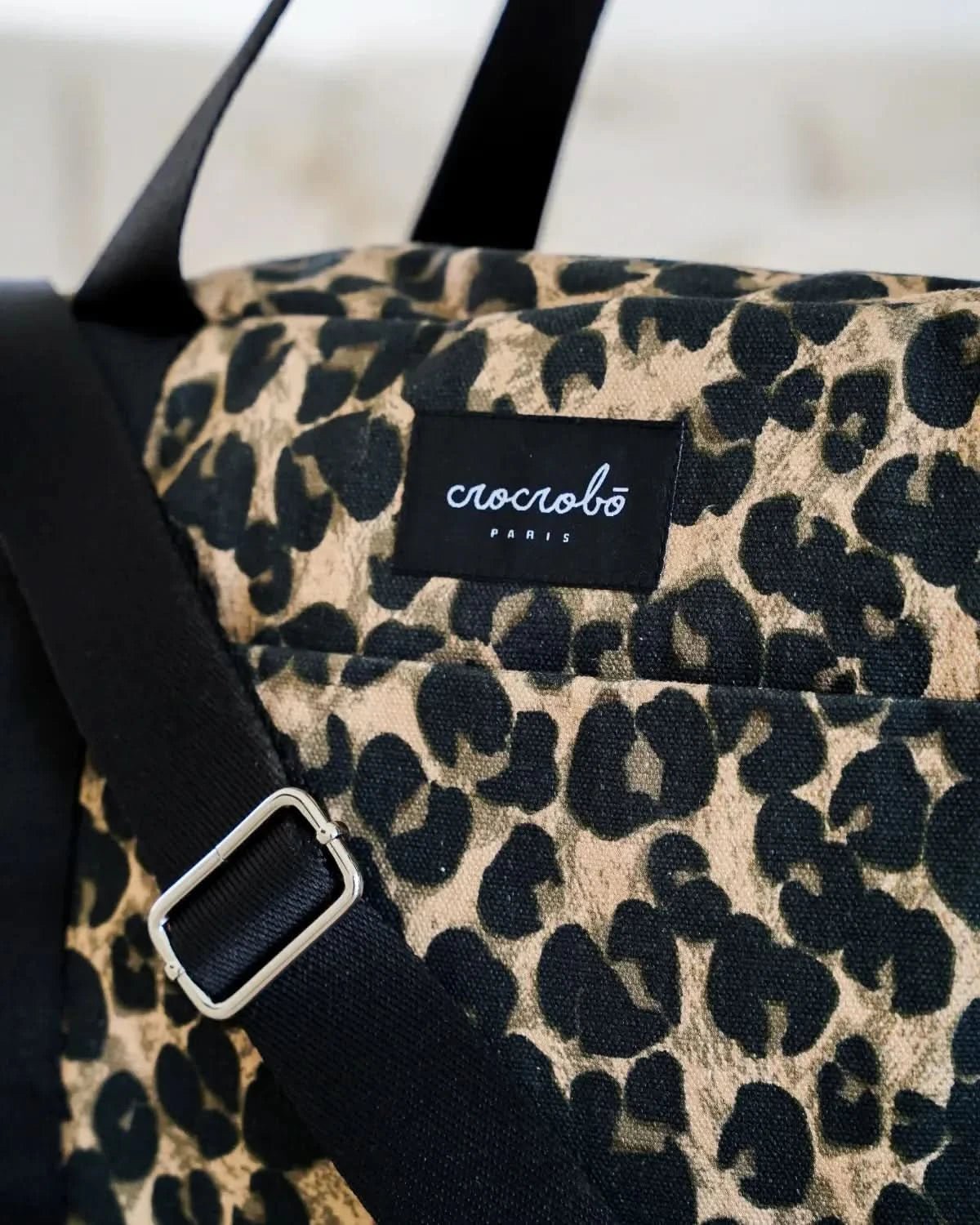
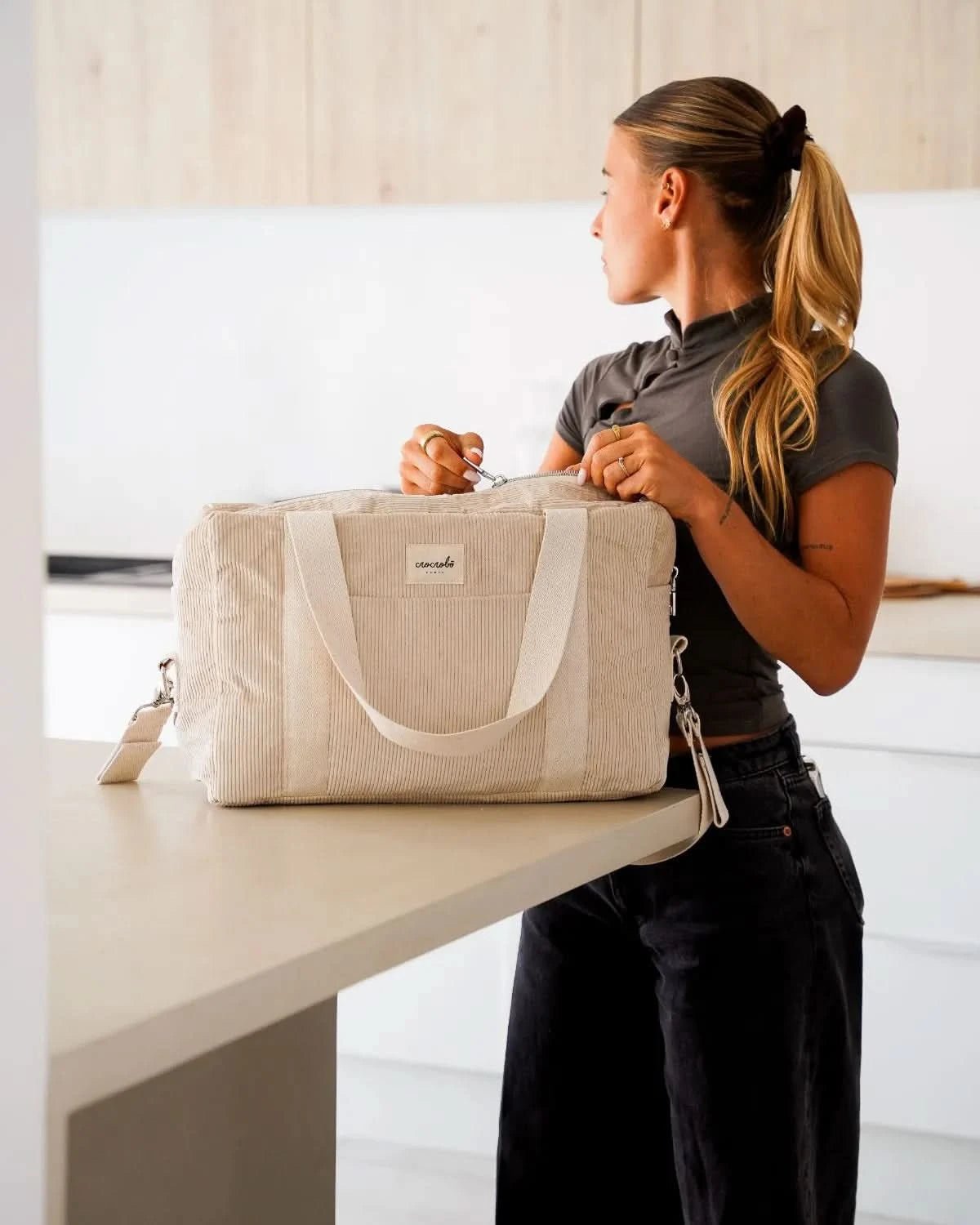
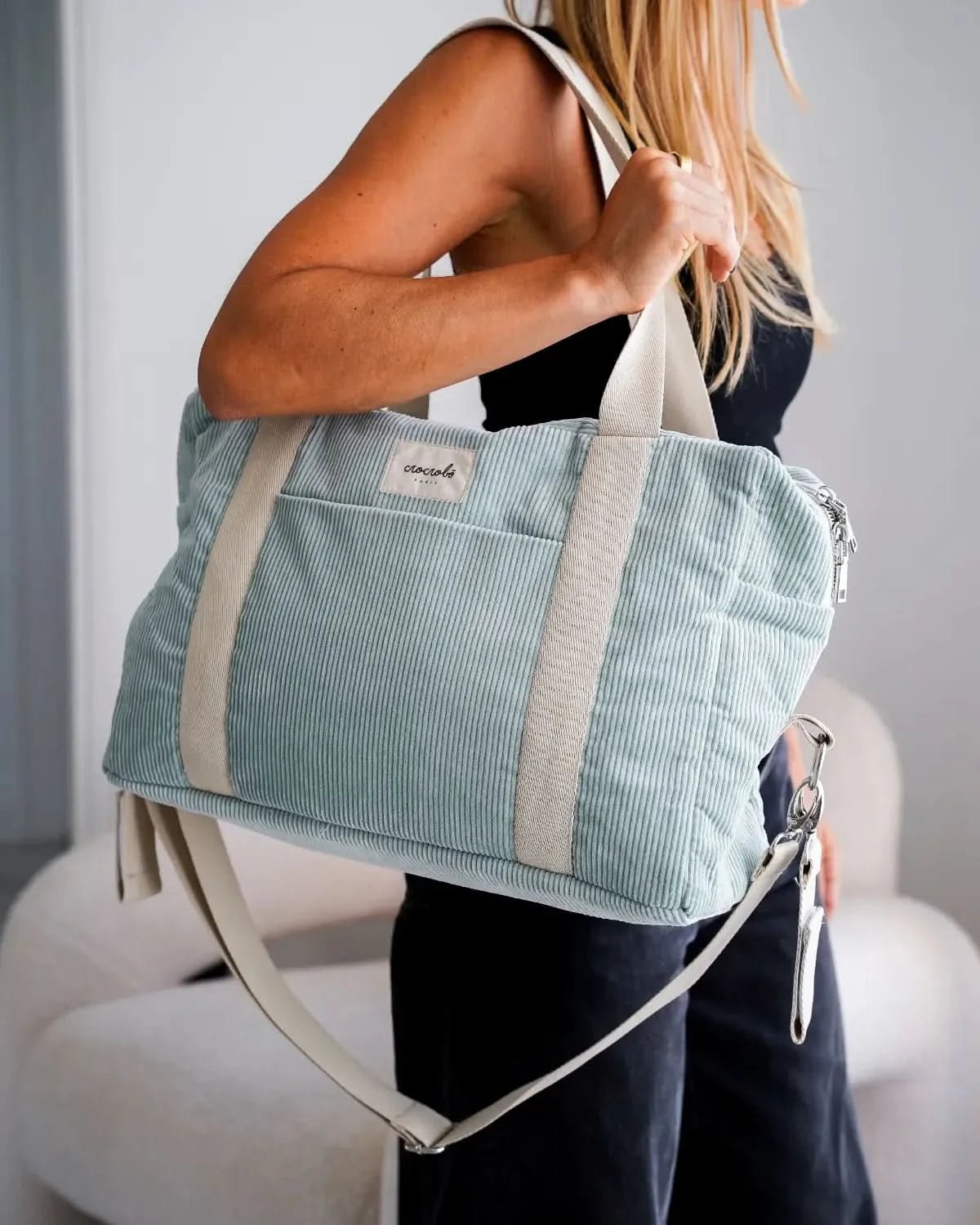
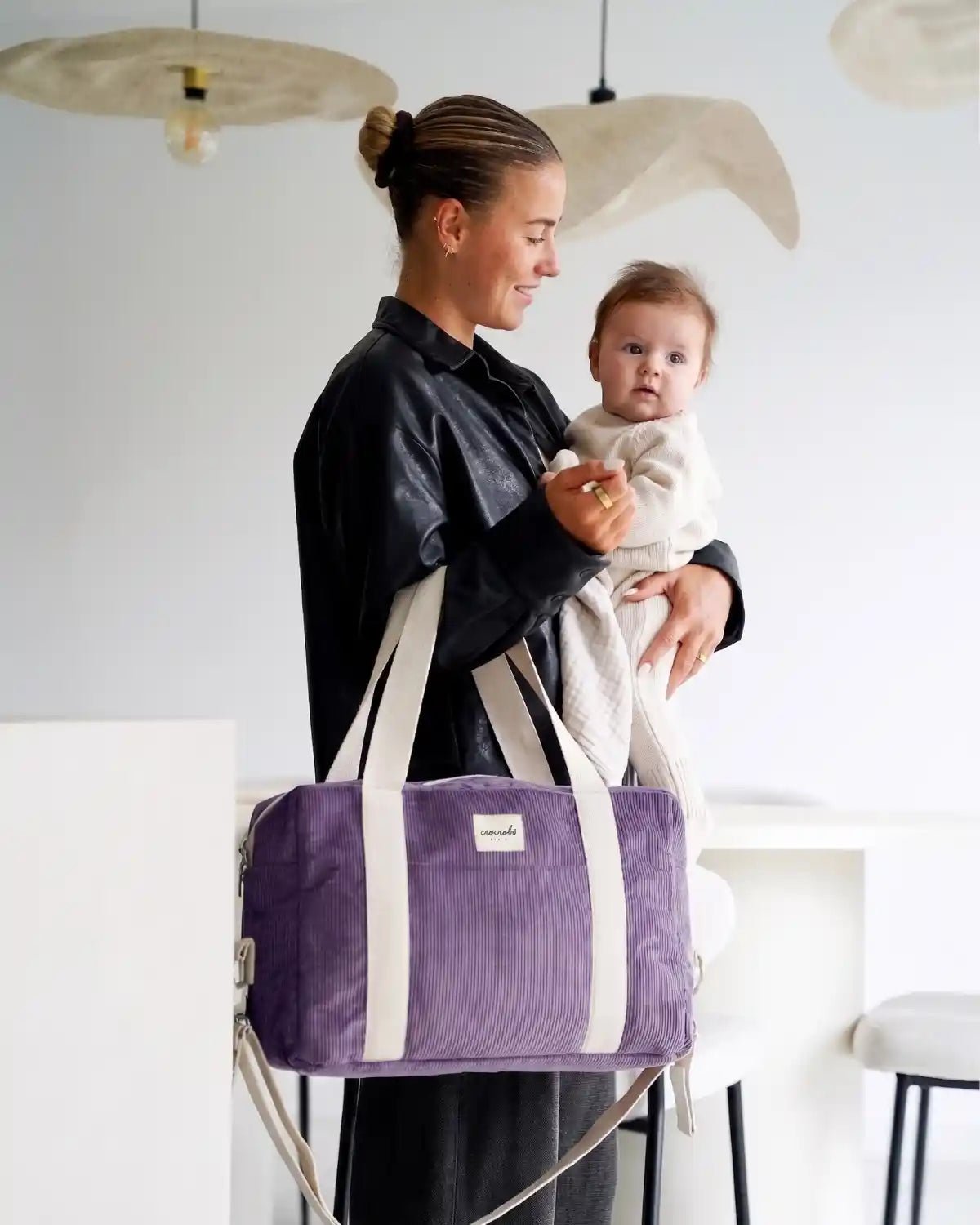
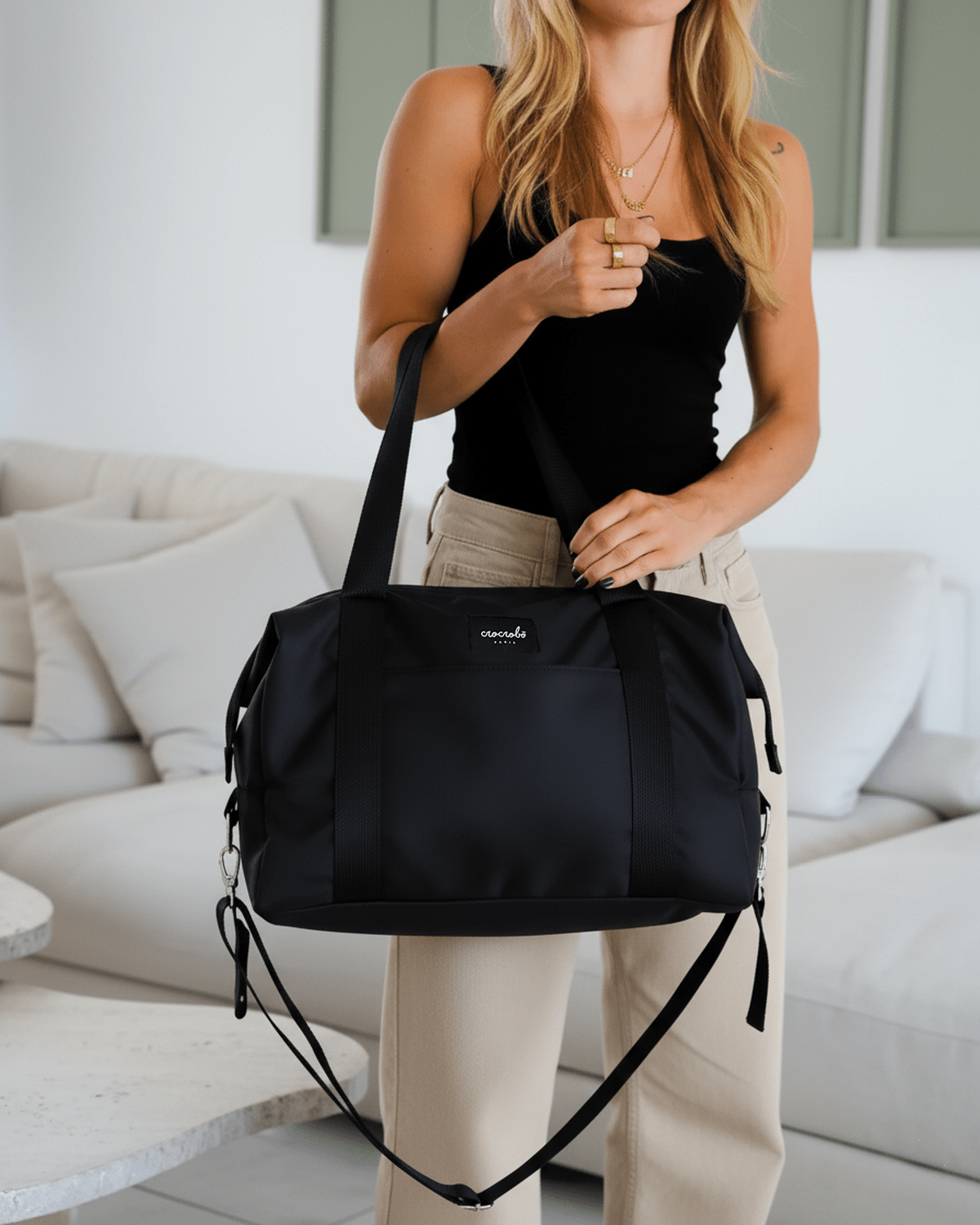
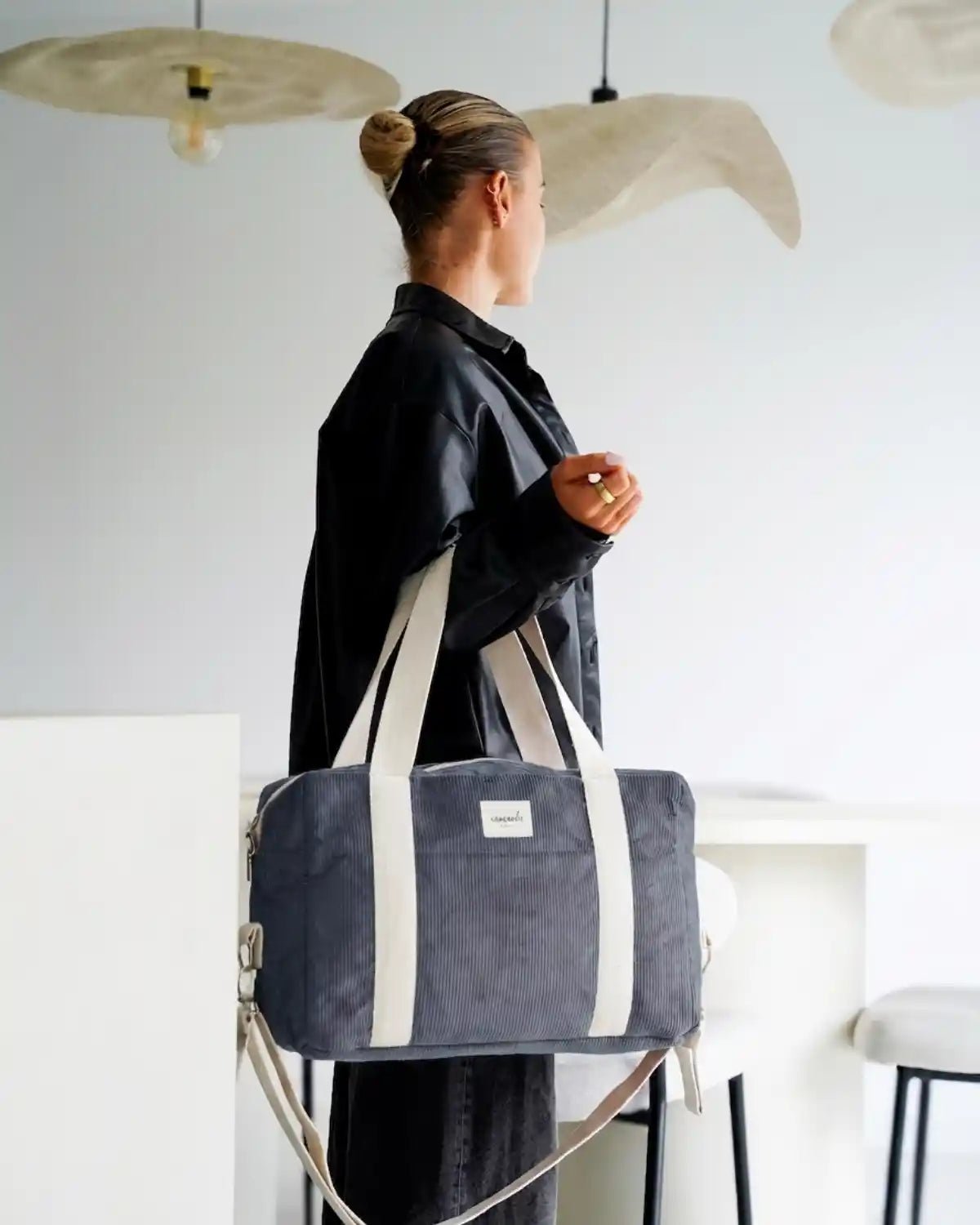
If you cannot decide: the 4-in-1 format (crossbody + shoulder + pushchair straps + built-in changing mat) ticks every box. That is exactly the thinking behind the Noah bag.
Our approach at Crocrobō Paris
When we designed the Noah changing bag, we asked ourselves a simple question: which bag would we want to carry for three years without tiring of it, and without apologising for it?
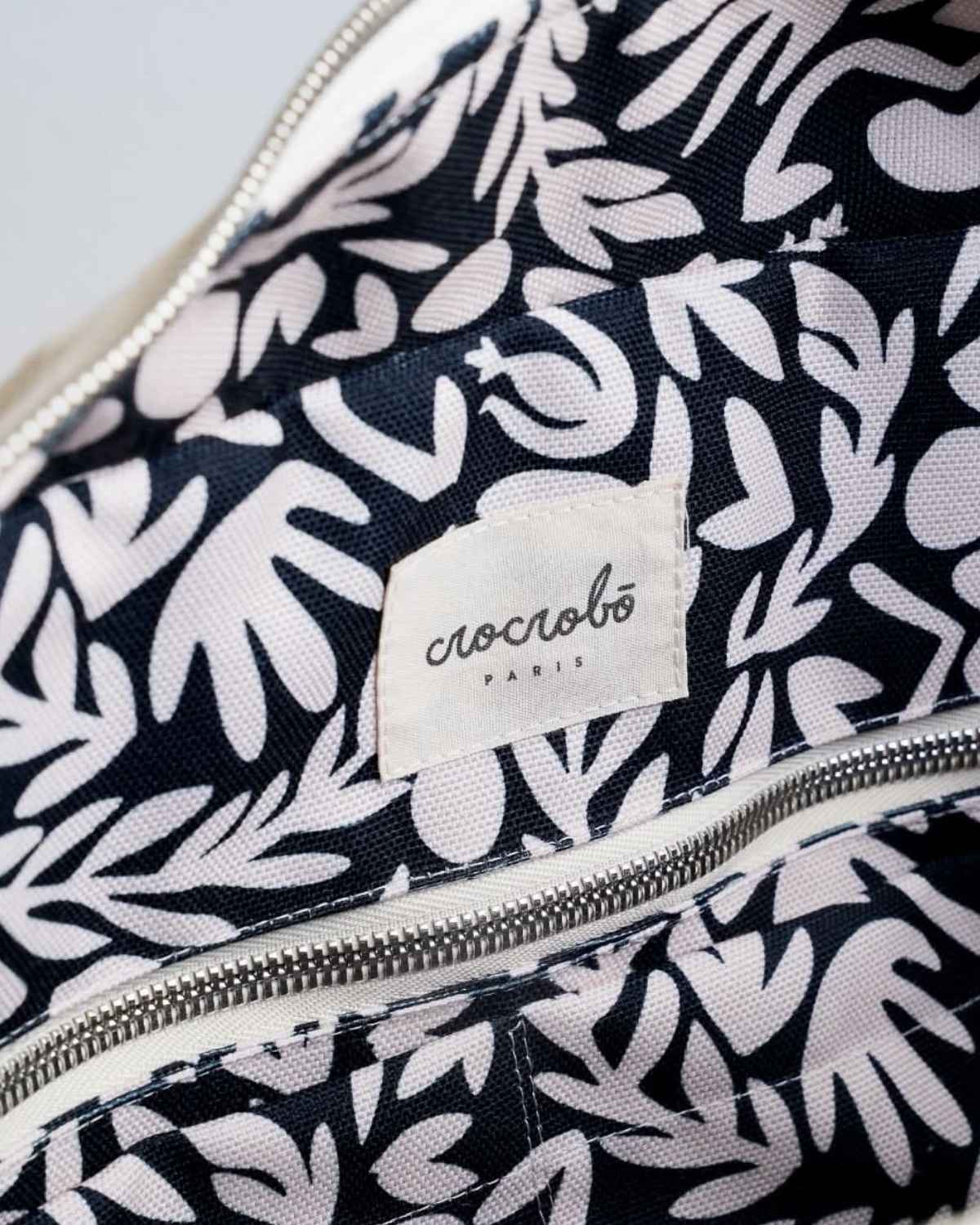
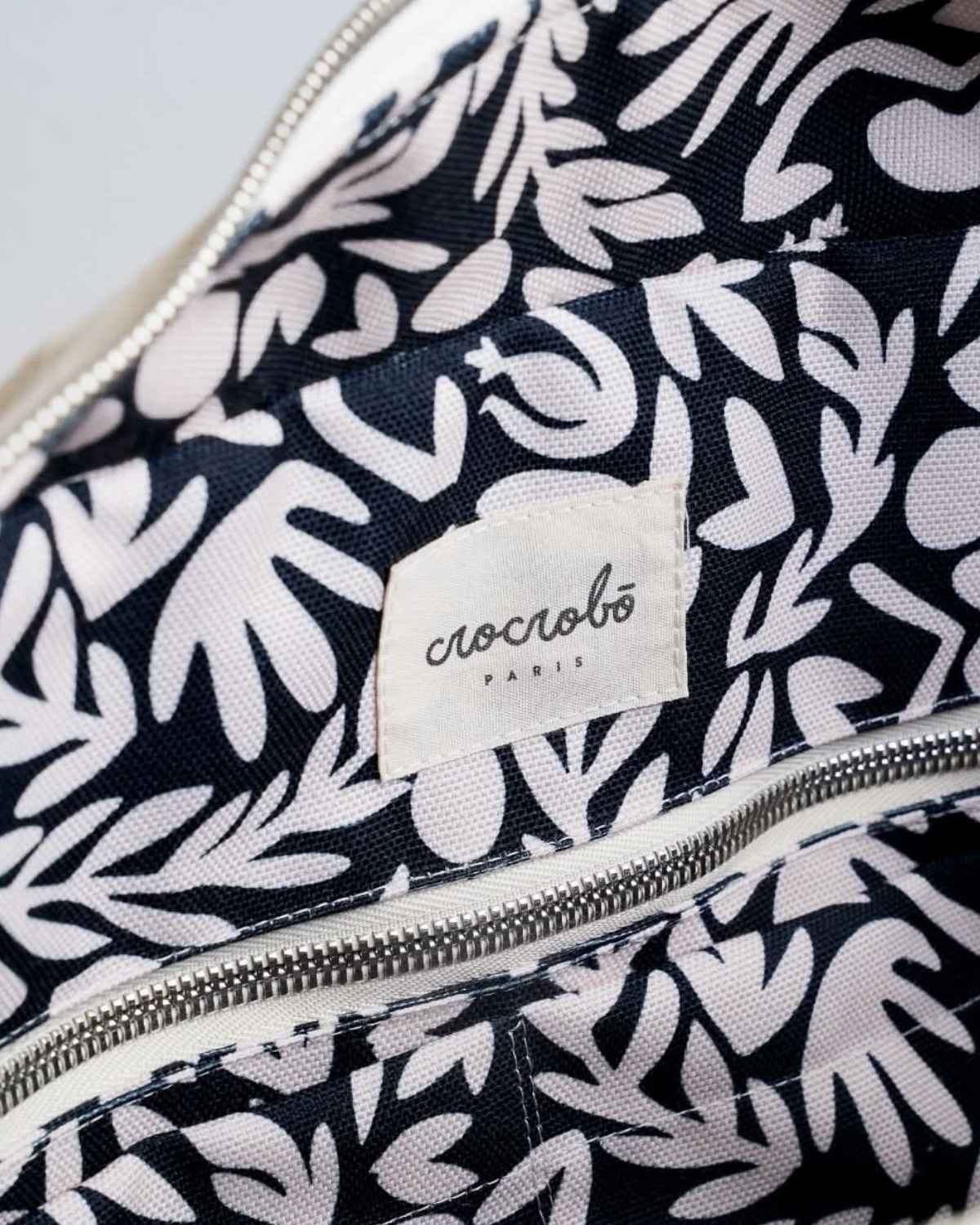
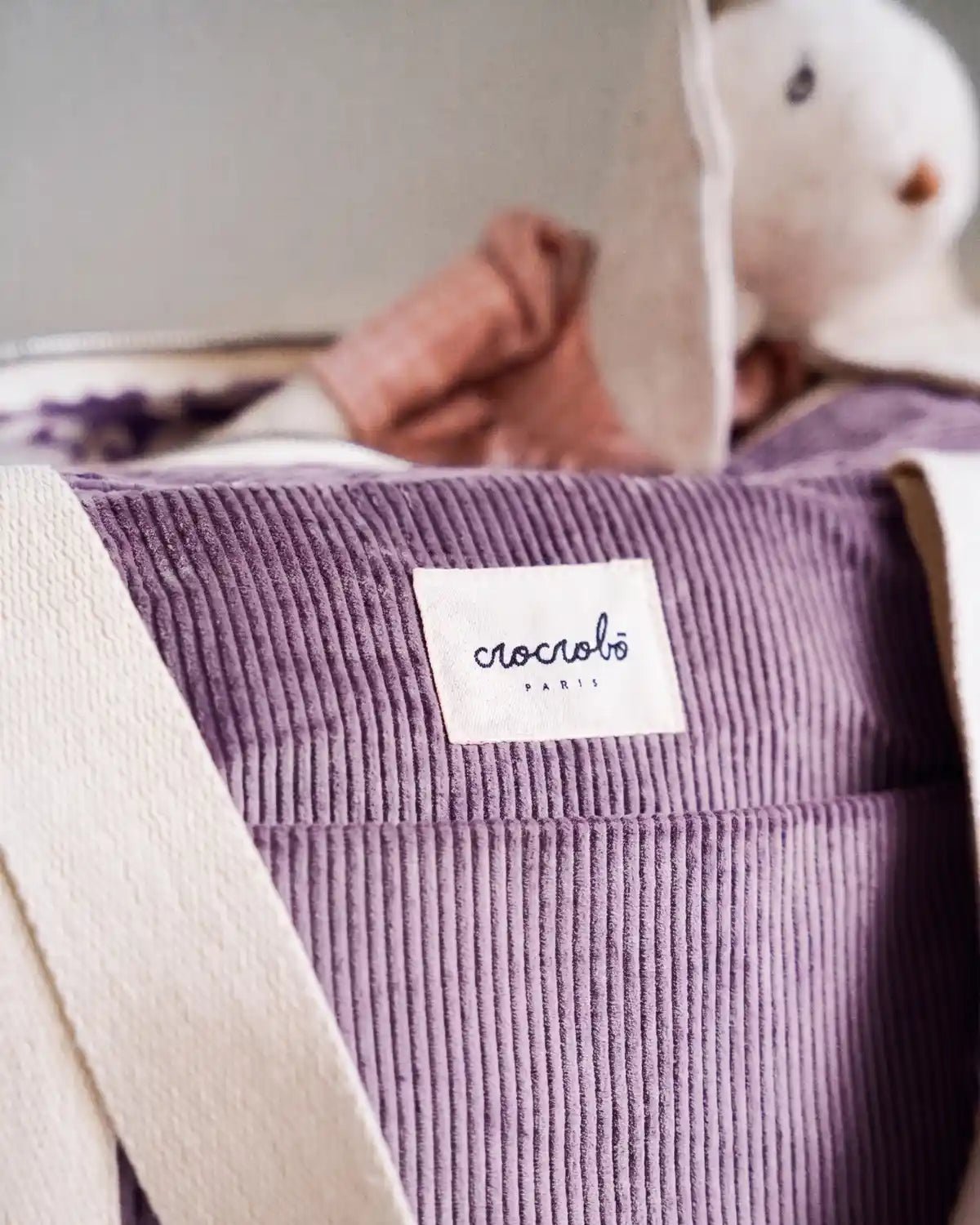
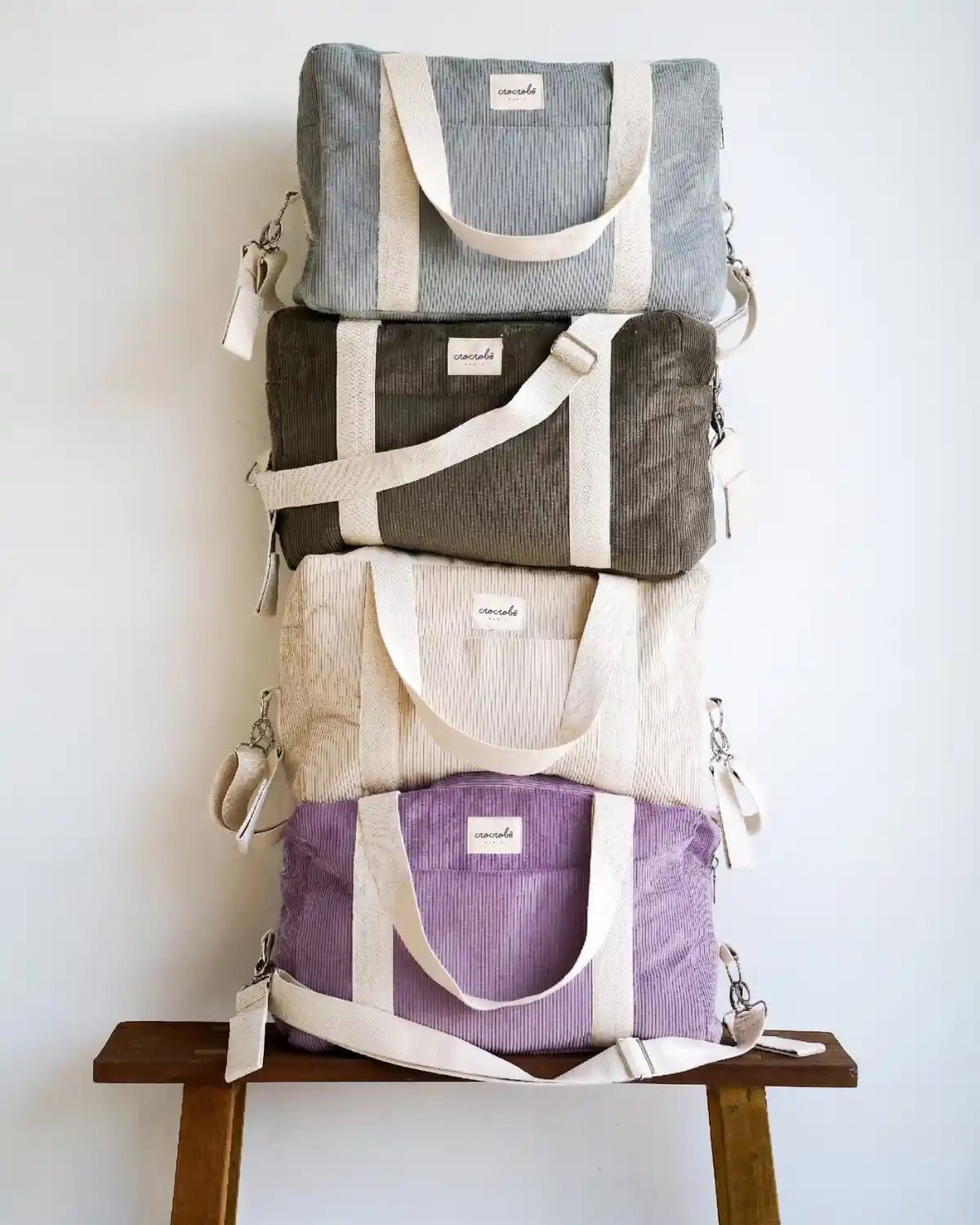
The answer: a bag that replaces four bags, certified Oeko-Tex Standard 100, vegan, made in Portugal by our long-standing partner workshop, with a built-in changing mat, compartments designed around the way parents actually reach for things, and a silhouette that does not shout “changing bag” from ten metres away.
Not one more eco-friendly brand indulgence. A bag you will carry for a long time, and keep well after your little one has moved on to a school backpack.
FAQ — your questions, our answers, no sleight of hand
Does an eco-friendly changing bag always cost more? More expensive to buy, generally yes (between €90 and €180 for a premium model, against €40–60 for an entry-level bag). Cheaper over its lifetime: a well-made certified bag lasts three to five years, where a low-end model loses its shape within a few months.
How do you wash an organic cotton changing bag? At 30 °C maximum, inside out, with a gentle detergent. Air-dry it. Avoid the tumble dryer, which breaks down the fibres and shortens the bag's life.
Do you need a changing bag if you already have an ordinary backpack? On paper, no. In real life, yes: insulated bottle compartments, a built-in changing mat, pushchair straps, quick access to the wipes… These are the details that turn a complicated outing into a calm one.
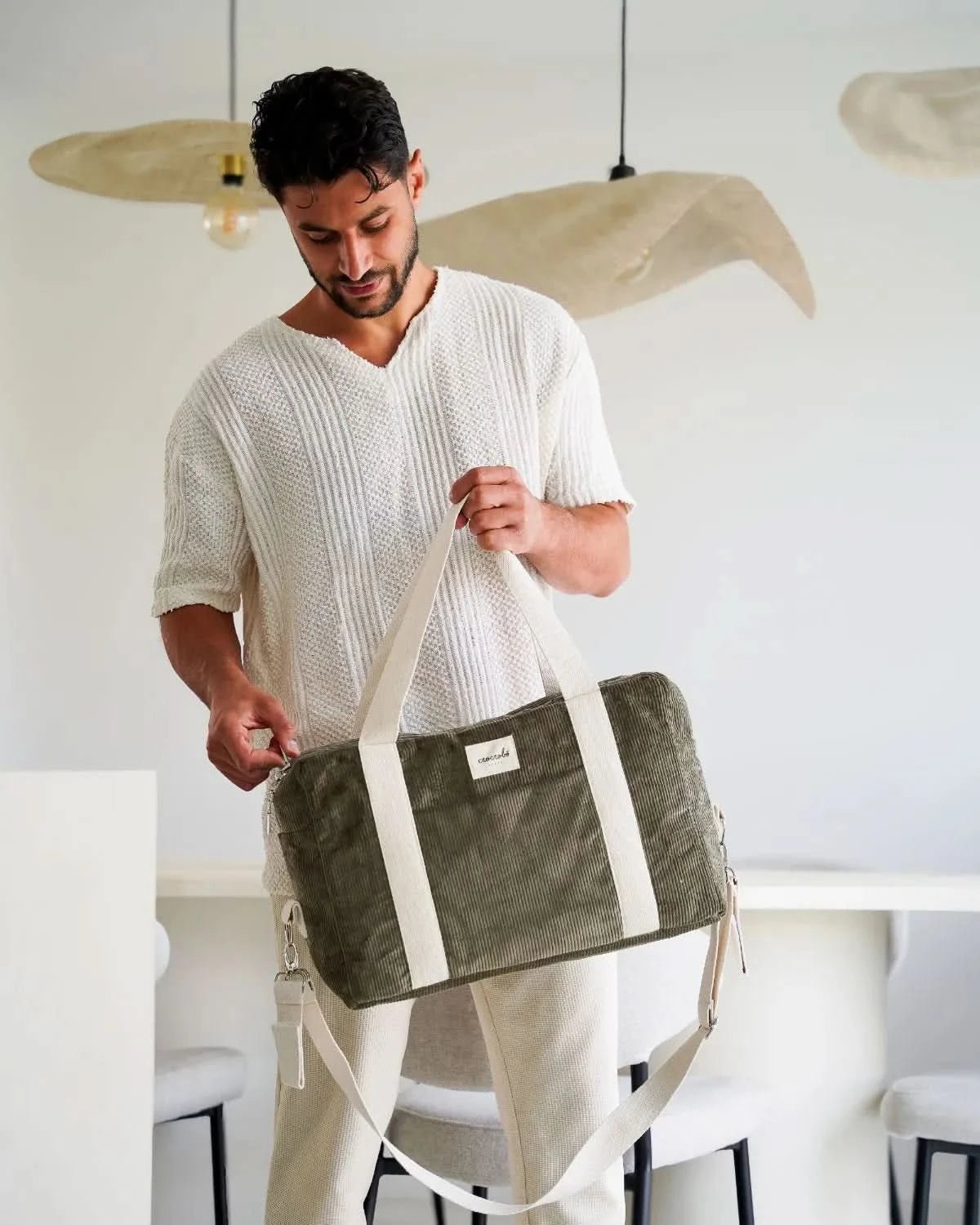
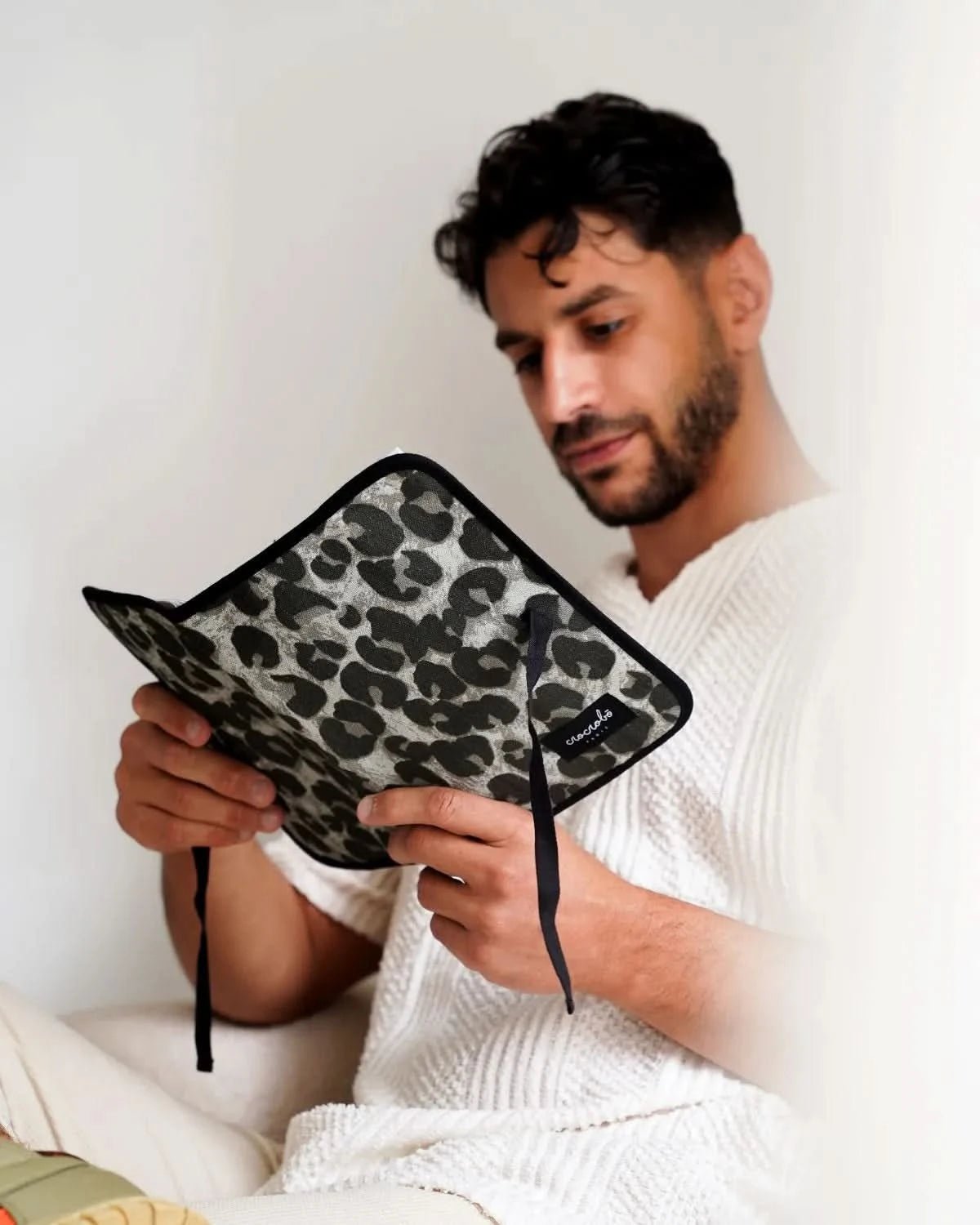
Is the Noah bag suitable for dads too? Yes. Its clean silhouette and neutral palette were designed to be carried by either parent. No frills that would tie it to one of you.
Made in Europe. Vegan. Oeko-Tex Standard 100. 48-hour delivery in France. 30 days to change your mind.